Primal Grow Pro Official Website › Blog › A Bottle With No Panel
What It Means When A Supplement Prints No Supplement Facts Panel
Most bottles on a supplement shelf carry a small black-ruled table on the back. Some do not, and the difference decides almost everything a buyer can work out for themselves. This is what the table does, what its absence costs, and what can still be learned from a label without one.
- A Supplement Facts panel is the table that turns an ingredient list into something a buyer can check against published research.
- Its four useful columns are the serving, each active with an amount, the daily value where one exists, and the other-ingredients line beneath.
- Without it, a buyer can still learn the serving, the count, the legal category and the names, and can learn nothing about quantity.
- Two published assays in this category found that even products WITH declared amounts frequently miss them, which is what a panel makes checkable.
- The honest substitute is the amount each ingredient's own trials used, printed beside the name and labelled as the trial's figure.
What the panel actually is
The Supplement Facts panel is a standardised table. Its format is prescribed, which is the point of it: whatever the product, the information sits in the same places, so a reader who has learned to read one has learned to read all of them.
The top line gives the serving size and how many servings the container holds. Beneath it runs one row per active ingredient with an amount per serving. Where a reference intake exists, a per cent Daily Value sits alongside. Underneath the ruled box comes the other-ingredients line, which is where the capsule shell, the fillers and the flow agents are declared.
The part people underestimate
Everything a buyer might want to calculate depends on the first two rows. Cost per day needs the serving size. Whether an ingredient is present at a researched level needs its amount. Whether a second supplement would double something needs both. The panel is not paperwork; it is the arithmetic surface of the product.
And the part that gets skipped
The other-ingredients line is read least and answers questions people care about most. Gelatin or hypromellose settles the vegetarian question in one word. A badge on the front implies that answer; the line beneath the panel states it.
Why most bottles carry one
A panel exists partly because buyers expect it and partly because it is the cheapest credibility a manufacturer can buy. A company confident in its formula gains from printing the numbers, because the numbers are the argument.
That logic runs the other way too, and it is worth stating without heat. A product whose amounts are modest has an incentive not to print them. A buyer outside the company cannot tell which situation a blank space represents, which is the whole difficulty. The systematic review of ingredients in popular male supplements found the published evidence behind finished products in this category to be absent, and where evidence is thin the incentive to publish a number is thinner.
The five things lost without it
| What a Supplement Facts panel carries | Why it is there | On this bottle |
|---|---|---|
| Serving size and servings per container | It converts a bottle into a supply and a price into a cost per day. | One capsule daily is stated, and 30 CAPSULES is printed on the front. This part is answered. |
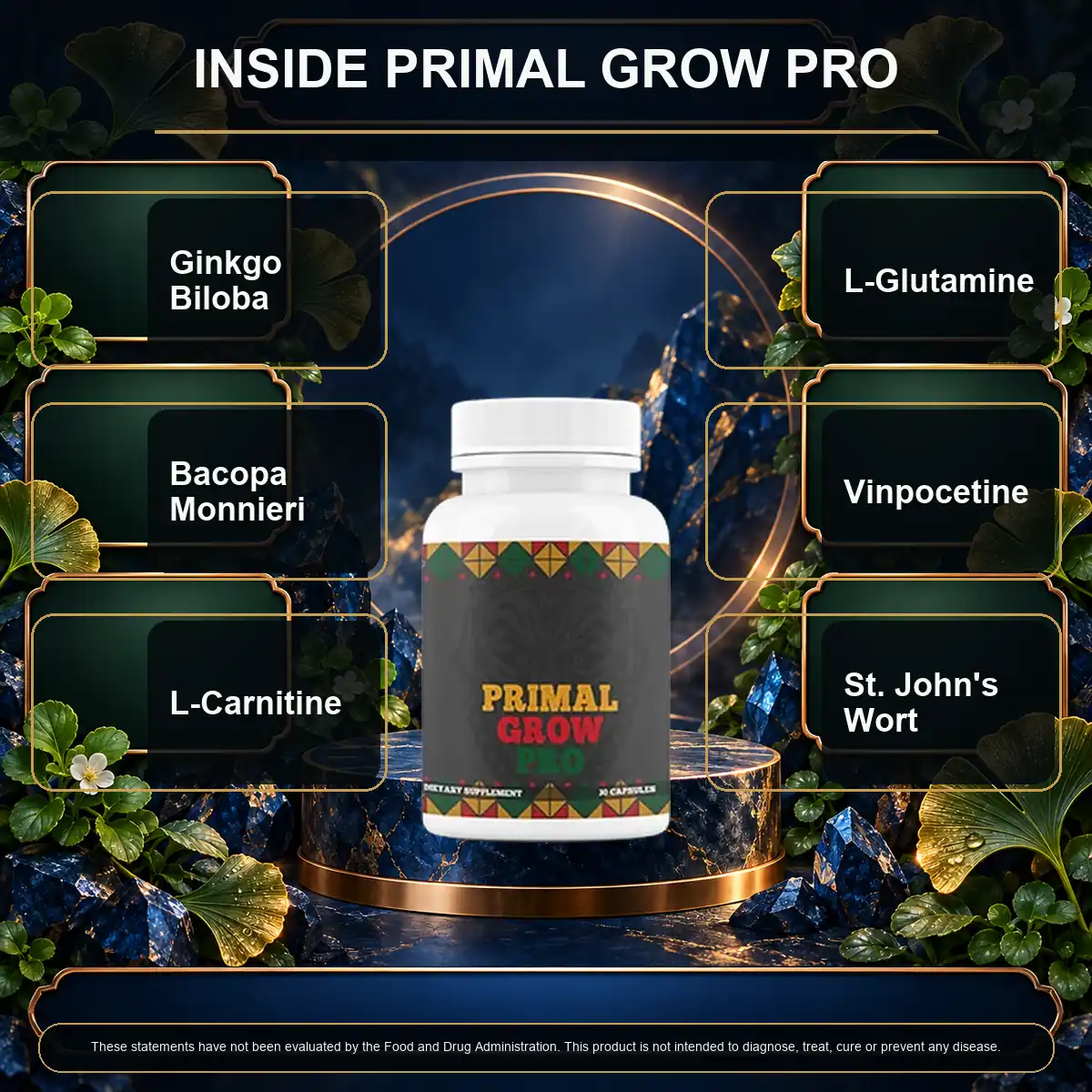
| Each active, with an amount per serving | It is the only way to compare a product with the research its ingredients borrow their reputation from. | Seven names appear across two marketing graphics. No figure accompanies any of them. |
| Per cent Daily Value where one is set | It places a vitamin or mineral against an established reference intake. | Not applicable to botanicals, and moot without amounts in any case. |
| An other-ingredients line | Fillers, flow agents, colours and the capsule shell material. | No such line exists anywhere in the artwork. |
| An allergen statement | Wheat, soy, milk and the rest, declared where present. | Four roundels imply allergen positions. None of them is a declaration. |
Five rows that a conventional panel carries. Two of the five are answered on this pack, and both of those are about supply rather than about contents.
Reading down the third column, five specific capabilities disappear with the panel and they are worth naming individually rather than as a general complaint.
- Comparison with the research. An ingredient’s literature belongs to the amount the trials used, and there is nothing to line a label up against.
- Comparison between products. Two bottles naming the same seven botanicals could differ tenfold in every row and look identical on their fronts.
- Stacking safety. Somebody taking a second supplement cannot tell whether they are doubling an ingredient, because neither label gives them a number to add.
- The shell material. No other-ingredients line means no answer about gelatin or hypromellose, which is the question behind every vegetarian badge on a capsule.
- A basis for an assay. A laboratory reports what it found against what the label declared. With nothing declared, a measurement has nothing to be measured against.
What can still be learned
A label without a panel is not a blank object. Four things remain readable and three of them are useful.
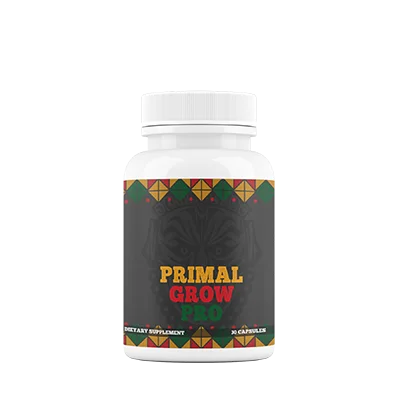
The serving and the count are usually printed on the front, and between them they fix the supply. Thirty capsules at one a day is a month, which turns a price into a cost per day and a pack into a period. That is real information and it is the basis of every sensible comparison of value in this category.
The legal category is printed too. The words DIETARY SUPPLEMENT place the product under a regime that permits structure and function statements and forbids disease claims, which tells a reader what the strongest honest sentence about it can be.
The names are worth something too. Knowing that a formula contains St. John’s wort matters whether or not an amount is printed.
A buyer taking a prescription medicine needs to know that St. John’s wort is in a formula. That is true at any amount, it is knowable from an ingredient list with no figures on it at all, and it is the single most useful thing an unquantified list still tells you.
The trial dose as a substitute, and its limits
If a label gives no figure, the only quantitative context available is the figure the published research used. Printing that beside each name is the honest substitute for a panel, and it is what this website does across every page.
| Ingredient named | On this label | What the published trials used |
|---|---|---|
| Ginkgo Biloba | No figure given | 120-240 mg a day, split over two or three doses |
| Bacopa Monnieri | No figure given | 300 mg a day of a standardised extract, 600 mg and above in the band where the 2026 analysis found an effect |
| L-Carnitine | No figure given | 2 g a day of propionyl-L-carnitine, alongside prescription sildenafil |
| L-Glutamine | No figure given | 20-30 g over a few hours, or about 0.1 g per kg four times a day |
| Vinpocetine | No figure given | 5-10 mg three times a day in clinical use |
| St. John's Wort | No figure given | 900 mg a day, given as 300 mg three times a day |
| Huperzine | No figure given | a few hundred micrograms a day |
The right-hand column belongs to other products in other trials. It is printed here because it is the only quantitative context available, and it is labelled as somebody else’s figure every time it appears on this website.
Two limits on that table deserve to be stated as plainly as the table itself.
It is somebody else’s figure. The bacopa trials that produced the 300 mg figure used a standardised extract prepared to a fixed bacoside content. A capsule containing unstandardised bacopa at 300 mg is not the same purchase, and one containing an unknown amount is not comparable at all.
And the scales do not match each other. Huperzine research runs in micrograms, ginkgo and bacopa in hundreds of milligrams, carnitine and glutamine in grams. A single capsule cannot hold all seven at their researched amounts, which is arithmetic rather than an accusation, and it is the most useful thing the right-hand column establishes.
See what the Primal Grow Pro label does print
Seven named botanicals, one capsule a day with a meal, 30 capsules to a bottle, and 60 days from the date of purchase to change your mind.
From $49 a bottle · $69 for a single month · 60-day money-back guarantee
Order Primal Grow Pro On The Official WebsiteLot PRI-26/PR-6751 · 30 capsules · taken once daily with food
What assays found when there WAS a declared figure
The strongest argument for a panel is not theoretical. Two published studies opened bottles in this category and measured what was inside, comparing the result against what each product declared on itself.
The first examined 22 US brain-health products carrying huperzine A. Servings ran from below the limit of quantification to 267 micrograms, and only two of the twenty-two came within 10 per cent of their own declared amount.
The second examined 23 US supplements carrying vinpocetine. Servings ran from 0.3 mg to 32 mg, a hundredfold spread, and six of the twenty-three contained none at all.
Both findings are about products that DID print a number. The number is what made the discrepancy visible, which is the uncomfortable symmetry at the centre of this subject: a missing panel is not evidence of a problem, and it is the condition under which a problem would be invisible.
Six questions worth asking a seller
- What is the amount of each named ingredient per capsule?
- Which plant part is used for each botanical, and to what is each extract standardised?
- What is the capsule shell made of?
- What is in the other-ingredients line, if there is one?
- Has any lot been assayed by an independent laboratory, and can that report be read?
- Why is no Supplement Facts panel printed?
Those six are reasonable, they are answerable, and the answers a company gives to them are informative whatever they contain. A seller who answers the first two in detail is telling you something. A seller who answers none of them is telling you something as well.
NCCIH’s guidance on using supplements sensibly makes the related point: whoever manages your health should know what you are taking. Where you cannot name amounts, name the ingredients instead.
What would fix this in one revision
A single artwork revision would change almost everything on this page, and it would not be an expensive one. A Supplement Facts panel with a figure for each of the seven names would make the trial-dose comparison a real comparison rather than a substitute, would make three more checks on any label scorecard answerable, and would let an independent assay mean something.
Two smaller additions would do disproportionate work alongside it: a capsule shell material, which settles the vegetarian badge in a word, and a caution line naming St. John’s wort.
Until then, the honest description of a bottle like this is a real product with a real routine and real terms of sale, whose contents cannot be checked by anybody outside the company that makes it. A buyer who finds that acceptable is making an informed decision, and so is a buyer who does not.
If you take any prescription medicine, the ingredient list matters more than the amounts. St. John’s wort in particular lowers blood levels of a long list of medicines including hormonal contraceptives, and that is worth one conversation with whoever writes your prescriptions before a first capsule. The safety page sets out the full list.
References
- Crawford C, Wang YH, Avula B, et al. The scoop on brain health dietary supplement products containing huperzine A. Clin Toxicol (Phila). 2020;58(10):991-996. PMID 31990212. https://pubmed.ncbi.nlm.nih.gov/31990212/
- Avula B, Chittiboyina AG, Sagi S, et al. Identification and quantification of vinpocetine and picamilon in dietary supplements sold in the United States. Drug Test Anal. 2016;8(3-4):334-43. PMID 26426301. https://pubmed.ncbi.nlm.nih.gov/26426301/
- Kuchakulla M, Narasimman M, Soni Y, et al. A systematic review and evidence-based analysis of ingredients in popular male testosterone and erectile dysfunction supplements. Int J Impot Res. 2021;33(3):311-317. PMID 32358510. https://pubmed.ncbi.nlm.nih.gov/32358510/
- Kongkeaw C, Dilokthornsakul P, Thanarangsarit P, et al. Meta-analysis of randomized controlled trials on cognitive effects of Bacopa monnieri extract. J Ethnopharmacol. 2014;151(1):528-35. PMID 24252493. https://pubmed.ncbi.nlm.nih.gov/24252493/
- Using Dietary Supplements Wisely. National Center for Complementary and Integrative Health, National Institutes of Health. https://www.nccih.nih.gov/health/using-dietary-supplements-wisely