Primal Grow Pro Official Website › Side effects
Side effectsPrimal Grow Pro Side Effects and Who Should Ask a Doctor
Most reported effects are mild: stomach upset, headache or dizziness, often eased by taking the capsule with a proper meal.
The key point is St. John’s wort, which can lower blood levels of hormonal contraceptives, anticoagulants, statins and other prescription drugs. If you take any prescription, talk to your doctor first.
One interaction that decides the most, six ingredients that rarely cause trouble, and the limits on saying anything about the capsule itself.
What a Primal Grow Pro buyer should know before the first capsule
The one item that outranks the rest, and why this page puts it before everything else.
One fact settles more than everything else on this page put together. St. John’s wort is one of the seven named botanicals, and it changes how the body handles a long list of prescription medicines. If you take a prescription of any kind, that is the conversation to have before the first capsule rather than after the third week.
Everything else here is ordinary supplement territory: mild, uncommon, usually settled by taking the capsule with a proper meal rather than with a cup of coffee. Ranking the two in that order is deliberate, because a page that treats every item equally buries the one that matters.
Nothing on this website is a substitute for the advice of whoever writes your prescriptions. What it can do is put the seven names in front of you in a form you can take to that conversation, which is what the list below is for.
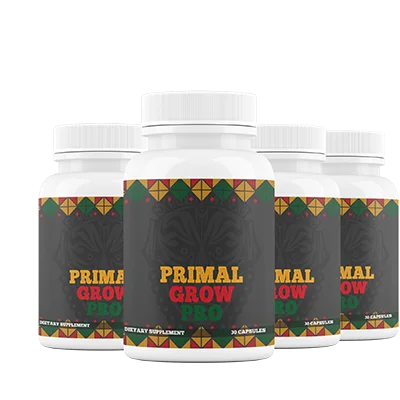
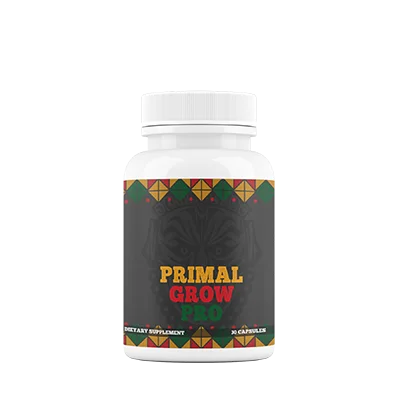
The bottle front carries the wordmark, the category line, the capsule count and a decorative band. The seller’s ingredients graphic carries the FDA disclaimer. Between them there is no warning text of any kind, which is unusual for a formula containing St. John’s wort and is the single change this desk would most like to see made to the artwork.
St. John’s wort in Primal Grow Pro: the interaction list in full
What it does inside the body, the eight medicine groups it reaches, and how the effect behaves over time.
St. John’s wort activates the pregnane X receptor, which in turn switches on the CYP3A4 enzyme system and the P-glycoprotein transporter. Both are part of how the body clears drugs. Switching them up means certain medicines are cleared faster and reach lower blood levels than the prescriber calculated for. The 2020 clinical review in the British Journal of Pharmacology is the current summary of which ones matter.
The medicines with documented, clinically relevant interactions are these:
- Hormonal contraceptives. A systematic review and a randomised trial in women on a low-dose pill both found altered hormone levels and breakthrough bleeding. This is the interaction most likely to affect somebody who is not the person taking the capsule.
- Transplant rejection medicines, ciclosporin and tacrolimus in particular, where a fall in blood level is a serious clinical event rather than an inconvenience.
- Antiretrovirals, where the same mechanism reduces drug exposure.
- Digoxin, through the P-glycoprotein route rather than the enzyme route.
- Warfarin and other anticoagulants, plus platelet inhibitors. The systematic review of warfarin and supplement interactions collects the case reports.
- Statins, several of which are CYP3A4 substrates.
- Several psychotropics, including serotonergic antidepressants, where the concern is additive rather than metabolic.
- Some chemotherapy agents, irinotecan and imatinib among them.
That list is not exhaustive and it is not meant to be memorised. The broader systematic review of herb-drug interactions puts St. John’s wort at the head of its own table for the same reason: more documented interactions than any other botanical in common retail sale.
Two practical points follow. The first is that the effect takes days to build and days to wear off, so starting and stopping is not a way around it. The second is that the interaction runs in the direction of less drug, not more, which means the first sign is often a medicine quietly working less well rather than a new symptom.
On its own account, taken by somebody on nothing else, St. John’s wort is reasonably well tolerated. The NIH LiverTox monograph records mild gastrointestinal upset, dizziness, dry mouth and photosensitivity as the usual complaints, with serious liver injury very rare. NCCIH’s summary reaches the same place.
None of that is a reason to avoid this product if you take nothing. It is a reason to ask one question if you do.
The other six Primal Grow Pro ingredients, one at a time
What the published literature reports for each of the other six names, and the circumstance that makes each one worth a second look.
| Ingredient | What is reported in its own literature | Who should be careful |
|---|---|---|
| Ginkgo biloba | Mild headache, dizziness and stomach upset are the usual reports. The bleeding question is the one that gets attention: the review of ginkgo with antiplatelet and anticoagulant drugs concluded the evidence for a clinically important interaction is weaker than the warnings imply. | Anyone on warfarin, a direct oral anticoagulant or a platelet inhibitor, and anyone with surgery booked. |
| Bacopa monnieri | Gastrointestinal complaints are the dominant report across the trial literature: nausea, cramping and loose stools, more common when taken without food. | Anyone with a sensitive stomach, which is one of the reasons the label says with a meal. |
| L-carnitine | Well tolerated at supplement amounts. The interesting finding is metabolic rather than symptomatic: gut bacteria convert carnitine to TMAO, and the human follow-up confirmed the pathway in omnivores. | Anyone advised to watch cardiovascular risk markers, as a question worth raising rather than a warning. |
| L-glutamine | Among the best tolerated compounds in clinical nutrition. The renal safety review found no kidney signal at the amounts studied in healthy people. | Nobody in particular at supplement amounts, though anyone with liver or kidney disease should raise it. |
| Vinpocetine | Usually mild: stomach upset, flushing, headache, sleep disturbance. The serious signal is developmental. A 2026 developmental toxicity evaluation adds to the existing concern. | Anyone pregnant or who might become pregnant. This is a clear avoid rather than a caution. |
| Huperzine A | A cholinesterase inhibitor, so its side-effect profile follows that mechanism: nausea, sweating, slowed heart rate at higher amounts. The meta-analysis of Alzheimer’s trials reports these as generally mild. | Anyone with a slow heart rate, anyone on a cholinergic medicine, and anyone with asthma or epilepsy. |
Six ingredients, drawn from their own published literature. None of it is a report about this capsule, because no amount is published for any row and no assay of this product exists.
Read down the right-hand column and a pattern appears that is more useful than any single row. Four of the six cautions are about a specific circumstance rather than about the ingredient: an anticoagulant, a pregnancy, a slow heart rate, a sensitive stomach. A buyer in none of those situations is looking at a list of mild, uncommon complaints.
The vinpocetine row is the exception and deserves to be read as one. It is not a caution about an interaction, it is a caution about a population, and the population is not the one this product is sold to. It matters anyway, because bottles sit in shared cupboards.
What Primal Grow Pro buyers actually report
What the distributor’s summary records, what a capsule like this normally produces, and the six signs that mean stopping.
The distributor’s own review summary carries 1,077 written reviews against 6,235 orders. What it records as the common complaint is not a symptom at all: it is a slow start, and wanting more in the first week. That is a disappointment rather than a side effect, and it is worth separating the two.
Across supplement categories the reports that do come back on a once-daily botanical capsule are consistent and dull. Mild stomach upset in the first few days. An occasional headache. A capsule that is harder to swallow than expected. Almost all of those settle within a week, and most of them settle immediately once the capsule is taken with a proper meal rather than with a coffee.
Three things are worth doing rather than worrying about. Take it with food, which the label asks for anyway. Take it at the same point in the day, so a change is attributable. And write down anything new in the first fortnight, because a symptom you noted on day three is evidence and a symptom you remember on day thirty is not.
- Any rash, swelling, or difficulty breathing. Stop immediately; this is the allergic pattern and it is the one that does not wait.
- Unusual bruising or bleeding that does not have an obvious cause.
- A heart rate that feels noticeably slower than normal, or dizziness on standing.
- Yellowing of the skin or eyes, or dark urine.
- Any prescription medicine that suddenly seems to be working less well than it was.
- Anything that starts after the first capsule and does not settle within a week.
Honest critique: the limits on any Primal Grow Pro safety statement
Why a safety profile needs a dose, and what two published assays of this category found.
Every statement on this page is about an ingredient, not about this capsule, and the reason is arithmetic rather than caution. A side-effect profile belongs to a dose. With no amount available for any of the seven names, the profile cannot be assembled for the product a buyer actually swallows.
That cuts both ways and it is worth saying so. A capsule containing a token quantity of St. John’s wort would be less likely to produce a clinically important interaction than one containing 900 mg. A capsule containing a token quantity is also less likely to do anything else. Neither possibility can be ruled in or out from the outside.
There is a second limit. Two assays of this category found what a buyer cannot: when 22 US products carrying huperzine A were measured, only two matched their own declared amount within 10 per cent, and when 23 products carrying vinpocetine were measured, six contained none at all. Both studies compared products against their own labels. This one declares nothing to compare against.
The honest conclusion is that safety here rests on the ingredient list being what the seller says it is, and on the amounts being modest. Neither can be verified from outside the manufacturer, and this website does not pretend otherwise. A buyer who needs verification before swallowing something will not get it from this product, and that is a legitimate reason to choose a different one.
Primal Grow Pro safety questions
Does Primal Grow Pro have side effects?
The published literature on its seven named ingredients reports mild and uncommon effects: stomach upset, headache, dizziness. Nothing specific to this capsule has been published, because no trial or assay of the finished product exists. The item that matters most is not a side effect but an interaction.
Can I take Primal Grow Pro with my prescription?
Ask whoever wrote the prescription first. St. John’s wort in the formula induces CYP3A4 and P-glycoprotein and lowers blood levels of hormonal contraceptives, transplant medicines, antiretrovirals, digoxin, anticoagulants, statins and several psychotropics. That is one short conversation and it settles the question.
Is Primal Grow Pro safe with blood thinners?
Two of the seven names, ginkgo and St. John’s wort, appear in the warfarin interaction literature for different reasons. The evidence for ginkgo is weaker than the warnings imply, and the St. John’s wort route is well established. Anyone on an anticoagulant should raise it with the clinic that manages it.
Can women take Primal Grow Pro?
The seller writes for adult men. Separately, vinpocetine has a developmental toxicity signal, so it is not a product for anyone pregnant or who might become pregnant, and the St. John’s wort interaction with hormonal contraceptives is documented in a randomised trial.
Should I stop taking Primal Grow Pro before surgery?
Tell the surgical team what you take and follow their instruction. Ginkgo and St. John’s wort both appear in perioperative guidance for different reasons, and most teams ask for herbal supplements to be stopped one to two weeks beforehand as a matter of routine.
What should make me stop taking Primal Grow Pro straight away?
A rash, swelling or difficulty breathing, which is the allergic pattern. Unusual bruising or bleeding. A noticeably slower heart rate or dizziness on standing. Yellowing of skin or eyes. And a prescription medicine that suddenly seems to be working less well than before.
Does Primal Grow Pro interact with alcohol?
Nothing in the seven named ingredients has a specific alcohol interaction in the literature. Alcohol does move the same things this formula is sold for, which is the practical reason to keep it steady across the eight weeks you spend judging the product.
Sources behind the Primal Grow Pro safety page
The interaction reviews, the monographs and the two category assays named above.
- Nicolussi S, Drewe J, Butterweck V, et al. Clinical relevance of St. John's wort drug interactions revisited. Br J Pharmacol. 2020;177(6):1212-1226. PMID 31742659. https://pubmed.ncbi.nlm.nih.gov/31742659/
- Berry-Bibee EN, Kim MJ, Tepper NK, et al. Co-administration of St. John's wort and hormonal contraceptives: a systematic review. Contraception. 2016;94(6):668-677. PMID 27444983. https://pubmed.ncbi.nlm.nih.gov/27444983/
- Pfrunder A, Schiesser M, Gerber S, et al. Interaction of St John's wort with low-dose oral contraceptive therapy: a randomized controlled trial. Br J Clin Pharmacol. 2003;56(6):683-90. PMID 14616430. https://pubmed.ncbi.nlm.nih.gov/14616430/
- Izzo AA, Ernst E. Interactions between herbal medicines and prescribed drugs: a systematic review. Drugs. 2001;61(15):2163-75. PMID 11772128. https://pubmed.ncbi.nlm.nih.gov/11772128/
- St. John's Wort. In: LiverTox: Clinical and Research Information on Drug-Induced Liver Injury. Bethesda (MD): National Institute of Diabetes and Digestive and Kidney Diseases; 2012-. Bookshelf ID NBK548880. https://www.ncbi.nlm.nih.gov/books/NBK548880/
- St. John's Wort and Depression: In Depth. National Center for Complementary and Integrative Health, National Institutes of Health. https://www.nccih.nih.gov/health/st-johns-wort
- Bone KM. Potential interaction of Ginkgo biloba leaf with antiplatelet or anticoagulant drugs: what is the evidence? Mol Nutr Food Res. 2008;52(7):764-71. PMID 18214851. https://pubmed.ncbi.nlm.nih.gov/18214851/
- Tan CSS, Lee SWH. Warfarin and food, herbal or dietary supplement interactions: a systematic review. Br J Clin Pharmacol. 2021;87(2):352-374. PMID 32478963. https://pubmed.ncbi.nlm.nih.gov/32478963/
- Koeth RA, Wang Z, Levison BS, et al. Intestinal microbiota metabolism of L-carnitine, a nutrient in red meat, promotes atherosclerosis. Nat Med. 2013;19(5):576-85. PMID 23563705. https://pubmed.ncbi.nlm.nih.gov/23563705/
- Koeth RA, Lam-Galvez BR, Kirsop J, et al. L-Carnitine in omnivorous diets induces an atherogenic gut microbial pathway in humans. J Clin Invest. 2019;129(1):373-387. PMID 30530985. https://pubmed.ncbi.nlm.nih.gov/30530985/
- Davani-Davari D, Karimzadeh I, Sagheb MM, et al. The renal safety of L-carnitine, L-arginine, and glutamine in athletes and bodybuilders. J Ren Nutr. 2019;29(3):221-234. PMID 30341034. https://pubmed.ncbi.nlm.nih.gov/30341034/
- Maki A, Marikawa Y. Developmental toxicity evaluation of the dietary supplement vinpocetine using mouse and human 3D gastruloids. Birth Defects Res. 2026;118(5):e70060. PMID 42167926. https://pubmed.ncbi.nlm.nih.gov/42167926/
- Avula B, Chittiboyina AG, Sagi S, et al. Identification and quantification of vinpocetine and picamilon in dietary supplements sold in the United States. Drug Test Anal. 2016;8(3-4):334-43. PMID 26426301. https://pubmed.ncbi.nlm.nih.gov/26426301/
- Yang G, Wang Y, Tian J, et al. Huperzine A for Alzheimer's disease: a systematic review and meta-analysis of randomized clinical trials. PLoS One. 2013;8(9):e74916. PMID 24086396. https://pubmed.ncbi.nlm.nih.gov/24086396/
- Crawford C, Wang YH, Avula B, et al. The scoop on brain health dietary supplement products containing huperzine A. Clin Toxicol (Phila). 2020;58(10):991-996. PMID 31990212. https://pubmed.ncbi.nlm.nih.gov/31990212/
Buy Primal Grow Pro once the interaction question is settled
One short exchange with whoever writes your prescriptions decides more than anything else on this website. Everything after it is ordinary supplement territory.
Ask about St. John’s wort and ginkgo by name · 60-day money-back guarantee
Order Primal Grow Pro On The Official WebsiteLot PRI-26/PR-6751 · 30 capsules · taken once daily with food