Primal Grow Pro Official Website › Blog › The Six-Year Ginkgo Trial
The Six-Year Ginkgo Trial Nobody Quotes
Three thousand and sixty-nine older adults took a standardised ginkgo extract twice a day for a median of six years, and it did not reduce dementia incidence. That is the largest and longest test this plant has ever been given, it is almost never mentioned on a label that contains it, and everything else written about ginkgo has to be read against it.
- The GEM trial gave 3,069 older adults 120 mg of a standardised extract twice daily for a median of 6.1 years and did not reduce dementia incidence.
- A positive result on a trial that size and that long would have been very hard to miss, which is what makes its absence the central fact about this plant.
- The 120 mg figure quoted on labels comes from trial protocols that generally gave it TWICE a day, so the daily intake was 240 mg rather than 120.
- Every trial worth the name used a standardised extract prepared to fixed flavone glycoside and terpene lactone percentages, not raw leaf.
- The largest and longest trial ever run gave 3,069 older adults 120 mg twice daily for a median of 6.1 years and did not reduce dementia incidence.
- The circulation evidence is real, modest and was gathered in people with a measurable circulatory problem rather than in healthy adults.
- A label carrying the words 'Ginkgo Biloba' and no other detail carries almost none of what the research depends on.
The trial that ran for six years
The single most informative piece of ginkgo research is also the one least likely to appear in marketing material.
The GEM trial recruited 3,069 older adults and gave them 120 mg of a standardised extract twice a day, or placebo, for a median of 6.1 years. The endpoint was dementia incidence. The result was that ginkgo did not reduce it.
Three things make that finding heavy. It is enormous by the standards of botanical research. It ran for over six years, which is longer than almost anything in this field. And it used the dose and the preparation that the literature had converged on, so it is not a study that can be dismissed as having tested the wrong thing.
A positive result on that trial would have been extremely hard to miss. Its absence is the single most important piece of context for any claim made about this plant, and a page quoting ginkgo trials without mentioning it is presenting a selection rather than a summary.
| Trial or review | Daily amount | How long | Who | What it found |
|---|---|---|---|---|
| The GEM prevention trial | 120 mg twice daily | A median of 6.1 years | 3,069 older adults | No reduction in dementia incidence. |
| The 2026 Cochrane review | Varied across included trials | Varied | Cognitive impairment and dementia populations | The current synthesis of the cognitive question. |
| Cochrane on intermittent claudication | Varied across 14 trials | Weeks to months | People with measurably impaired leg circulation | Small differences in pain-free walking distance, of uncertain clinical importance. |
| The review of ginkgo and sexual function | Varied | Varied | Mixed, including people on antidepressants | Collected trials on sexual function; the controlled results were not encouraging. |
| Ordinary oral use, per LiverTox | 120 to 240 mg a day, in two or three doses | Not applicable | General | The dosing range the monograph describes as typical. |
Five entries. Note the split doses: the figure people quote as 120 mg is usually one half of a twice-daily regimen rather than a whole day's intake.
Where the 120 mg figure came from
Ask most people in this category where the ginkgo dose comes from and they will say 120 mg. That figure is real, it comes from the clinical literature, and it is usually being quoted incorrectly.
The NIH LiverTox monograph describes typical oral use as 120 to 240 mg a day, given in two or three divided doses. The 120 mg that circulates as a headline number is frequently one half of a twice-daily regimen, which makes the day’s intake 240 mg.
That distinction matters for a once-daily product in a way it does not for a twice-daily one. A capsule taken once, even at a matching daily total, is not the regimen the trials ran. Whether that changes the outcome is a fair question and it has not been answered, because nobody has run the comparison.
The word doing the most work: standardised
Ginkgo leaf is not the ingredient in the trials. The ingredient is an extract, prepared to fixed percentages of two classes of compound: flavone glycosides and terpene lactones. The best-studied preparations hold those percentages constant from batch to batch, which is what makes a trial result transferable to a later bottle at all.
So a label naming only the plant has left out what the research depends on. Two products both carrying 120 mg of a ginkgo extract can differ in the compounds the literature credits, and nothing on either front panel would show it.
NCCIH’s summary of ginkgo is a reasonable general starting point for a reader who wants a neutral overview of what has and has not been established.
What that means for a combination formula
In a seven-ingredient capsule the standardisation question is usually unanswerable, because combination products rarely specify it even when they specify amounts. A buyer comparing a combination with a trial is comparing a name with a preparation, and those are not the same kind of object.
The rest of the cognitive literature
GEM asked a prevention question in people who did not have dementia. A separate body of work asks a treatment question in people who do, and it is the one the 2026 Cochrane review of ginkgo for cognitive impairment and dementia synthesises.
Cochrane reviews are worth reading rather than summarising, and the honest one-line version is that the modern syntheses in this area are cautious. That caution is itself the useful finding: a plant with this much research behind it and this little consensus is telling you the effect, if present, is small.
The population point recurs throughout. Most of the cognitive work sits in older adults with measurable impairment. A healthy forty-five-year-old wanting sharper afternoons is not the person those trials recruited, and the result does not transfer to them in either direction.
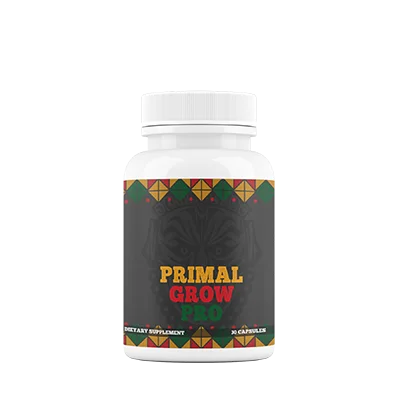
See how Primal Grow Pro names its ginkgo row
Seven botanicals named across two graphics, one capsule a day with a meal, and 60 days from the date of purchase to change your mind.
From $49 a bottle · $69 for a single month · 60-day money-back guarantee
Order Primal Grow Pro On The Official WebsiteLot PRI-26/PR-6751 · 30 capsules · taken once daily with food
The circulation evidence, which is different
Ginkgo’s circulation literature is separate from its cognitive literature and it is in better shape, in the narrow sense that it found something.
The Cochrane review of ginkgo for intermittent claudication pooled fourteen trials in people whose leg circulation was impaired enough to cause pain on walking. It reported a difference in pain-free walking distance that was small and of uncertain clinical importance.
That is a genuine finding and it is also a narrow one. The participants had a diagnosed circulatory problem, the measure was a walking test, and the effect was modest. Reading it as support for a general circulation claim in healthy adults stretches it a very long way.
It does explain, honestly, why ginkgo appears on a label that names circulation as one of its supports. There is a literature there. It is just not a literature about the person buying the bottle.
Ginkgo and sexual function, which is different again
Ginkgo turns up in male vitality formulas partly on the strength of a small sexual-function literature, and that literature is worth knowing about because it is mostly negative.
A systematic review of clinical trials on ginkgo and sexual function collects what exists. The controlled trials in this area, including work in people whose sexual dysfunction was caused by antidepressant medication, did not show ginkgo performing better than placebo.
The open-label reports that generated the original interest looked more promising, which is a familiar pattern: an uncontrolled observation produces enthusiasm and a controlled trial does not confirm it. That sequence is the reason controlled trials exist.
So a ginkgo row in a vitality formula is best read as a circulation row rather than a sexual-function one, and even then with the population caveat attached.
The bleeding question, in proportion
Ginkgo has a reputation for interacting with blood-thinning medicines, and the reputation is stronger than the evidence.
The concern rests on case reports and on a plausible mechanism involving platelet activating factor. Reviews that have examined it carefully tend to conclude that the evidence for a clinically important interaction is weaker than the warnings imply.
Weak evidence of harm is not evidence of safety, which is why the practical advice does not change: anybody on an anticoagulant or a platelet inhibitor, and anybody with surgery booked, should say what they are taking. The conversation costs nothing and the alternative is a small unnecessary risk.
How to read a ginkgo row on any label
| What a ginkgo row should carry | Why | What a bare name tells you |
|---|---|---|
| The amount per serving | It is the only way to compare with the trials. | Nothing. |
| The plant part | Leaf extract is what the trials used. | Nothing, though leaf is the commercial default. |
| The standardisation | Trials used extracts prepared to fixed flavone glycoside and terpene lactone percentages. | Nothing. This is the difference between an extract and the extract. |
| The extract ratio | It relates the extract weight to raw leaf. | Nothing, and without it a milligram figure is harder to interpret than it looks. |
| Whether the dose is split | Every long trial split it across the day. | A once-daily product differs from the trial regimen even at a matching total. |
Five things that turn a ginkgo row into something checkable. A label carrying the name alone carries none of them.
Five things, and a label carrying all five is unusual enough to be worth noticing. Most carry one or two. A row reading “Ginkgo Biloba Extract (leaf), standardised to 24% flavone glycosides and 6% terpene lactones, 120 mg” is a company telling you it knows which literature it is borrowing from.
And what to do when the row is just a name
- Take the name seriously anyway. Knowing ginkgo is present is genuinely useful for the interaction question, whatever the amount.
- Do not transfer the trial result. A name is not a dose and a dose is not a preparation. The GEM figure belongs to GEM.
- Ask the seller the five questions in the table above. They are reasonable and the answers are informative whatever they are.
- Weigh the refund terms more heavily. Where nothing can be verified before purchase, the ability to undo it is the practical substitute.
- Judge it on your own eight weeks. With no figure to compare against, your own measurements are better evidence about your own experience than any trial in this post.
- And remember the largest trial was negative. Expect something subtle or nothing at all, which is what the literature supports.
None of that is a reason to dismiss ginkgo. It is one of the most studied plants in commerce, its safety record in ordinary use is good, and its circulation literature found something real in the population it looked at. It is a reason to be precise about what the number on a label means, and to notice when there is no number at all. The ingredients page sets out what this particular label carries.
References
- DeKosky ST, Williamson JD, Fitzpatrick AL, et al. Ginkgo biloba for prevention of dementia: a randomized controlled trial. JAMA. 2008;300(19):2253-62. PMID 19017911. https://pubmed.ncbi.nlm.nih.gov/19017911/
- Wieland LS, Ludeman E, Chi Y, et al. Ginkgo biloba for cognitive impairment and dementia. Cochrane Database Syst Rev. 2026;2(2):CD013661. PMID 41641880. https://pubmed.ncbi.nlm.nih.gov/41641880/
- Nicolai SP, Kruidenier LM, Bendermacher BL, et al. Ginkgo biloba for intermittent claudication. Cochrane Database Syst Rev. 2013;2013(6):CD006888. PMID 23744597. https://pubmed.ncbi.nlm.nih.gov/23744597/
- Niazi Mashhadi Z, Irani M, Kiyani Mask M, et al. A systematic review of clinical trials on Ginkgo (Ginkgo biloba) effectiveness on sexual function and its safety. Avicenna J Phytomed. 2021;11(4):324-331. PMID 34290964. https://pubmed.ncbi.nlm.nih.gov/34290964/
- Ginkgo. In: LiverTox: Clinical and Research Information on Drug-Induced Liver Injury. Bethesda (MD): National Institute of Diabetes and Digestive and Kidney Diseases; 2012-. Bookshelf ID NBK548847. https://www.ncbi.nlm.nih.gov/books/NBK548847/
- Ginkgo: Usefulness and Safety. National Center for Complementary and Integrative Health, National Institutes of Health. https://www.nccih.nih.gov/health/ginkgo